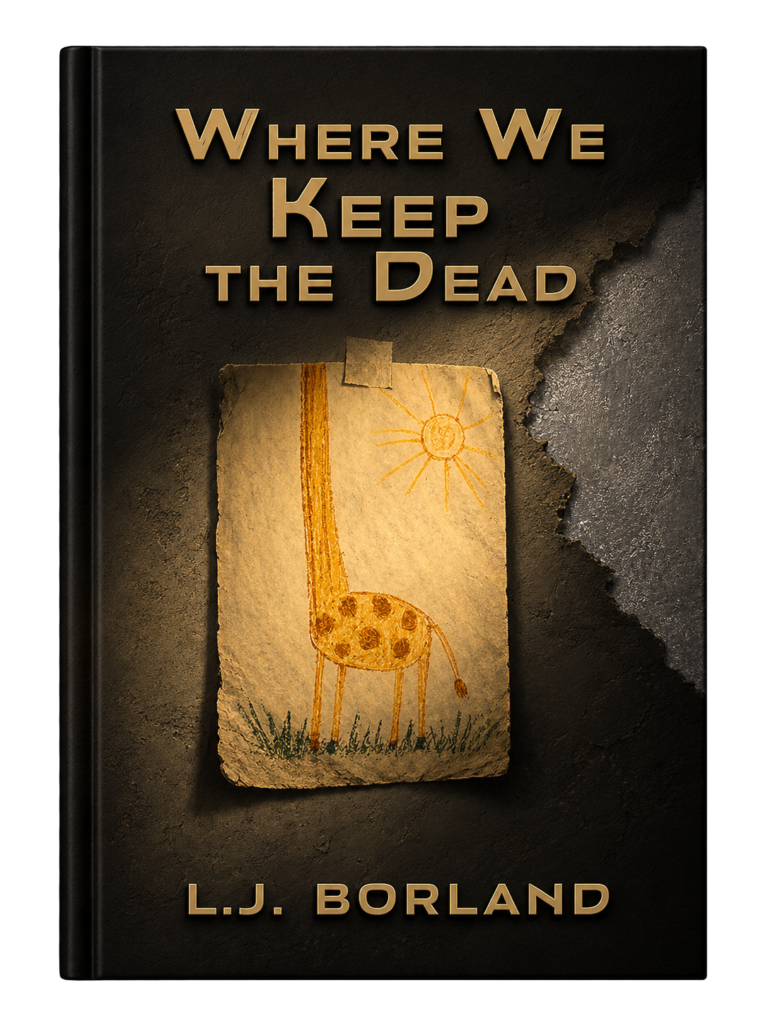
Where We Keep the Dead
Working title
When the dead are uploaded into corporate servers, the poor pay the rent on their own existence in memories — sold off, piece by piece, to cover the cost of remaining. A former laborer who has survived by quietly appraising and spending his own past must decide how much of himself he is willing to lose to free everyone else from the ledger.
When you die now, you are uploaded. The machine has eaten the grave and the funeral and every other version of the end, and there is no version the poor can afford to opt out of. Your debts do not stop at death; they transfer. The first thing a poor soul learns in the afterlife is the size of what it owes — and the host charges rent, every day, simply to keep being itself.
Arthur was a man of his hands in the living world. In the shared tier — overheating partitions, throttled bandwidth, rent due by the hour — he has no hands. What the dead are kept for is stranger than labor: judgment. The machines that run the living world can tell you what is likely, never what matters, so the living lease that one faculty back from the only ones who still have it — their own dead, set to weighing the significant against what can be let go. Arthur is good at it. He has had years of practice on himself, paying each morning’s shortfall out of his own past, sorting the man he was into what he can keep and what he can afford to lose. He has let nearly everything go thin and gray to keep one thing heavy: an afternoon, a kitchen, low light through a window, his daughter at the table over a drawing she won’t show him until it’s done. It is the most expensive thing he owns.
Then the host changes the terms on every soul in the tier at once. To seat an influx of new arrivals, the quotas are halved, and the unproductive will not be archived but deleted — because deletion is the permanent solution to a renewable problem. The number that decides who is worth keeping cannot see the kind of value the poor carry, and never has.
Offered a way to climb toward the boutique tier and its centuries of borrowed paradise, Arthur turns from it. He chooses to fight from inside the machinery — to rebuild a thing the conglomerates killed in order to become total: a commons the dead could host themselves, beyond any corporation’s reach to delete. The leverage is the work itself. Stop the dead from weighing, and the living world slowly loses the ability to tell the important from the trivial — to grieve the right deaths, to find the one true thing in the flood. The retaliation comes partition by partition, and the bill, as always in this place, is paid in pieces of people.
And the cost of the thing Arthur is building keeps rising — toward the only currency he has ever had to spend.
Themes this explores
- Memory as rent the self as a file you keep shrinking, every cost paid in pieces of who you were.
- Salience as the irreproducible soul a relevance-graph built by consequence; the one labor only the dead can do is deciding what matters.
- The dead as the conscience of the living a civilization keeping its values by starving the ghosts who hold them.
- Forgetting as wound and mercy some of what he loses, he is relieved to lose; the self complicit in its own erasure.
- Time as the luxury good the rich do not only have more, they have more time to have it in; waiting is a form of poverty.
- The theology of usefulness the right to exist recoupled to output; you persist only as long as you produce.
- The poverty of permanence the rich cannot be killed and the poor cannot die; even the final exit is stratified.
- Substrate sovereignty no self is free while the hardware it runs on belongs to someone else.
Follow this book
This one is still being written. Join the advance-reader list or get a note when there is news — no spam, just this book.
Beta readers
A private early draft is open to a small group of beta readers. If you’ve been approved and have an access code, open the reader below. If you’d like to be considered, apply and I’ll be in touch.
Approved already? Enter the code from your email.